

Cleaning White Sneakers: DIY vs Foam Cleaner (Part 1)

If you’re here, you’re probably looking at that pair of white sneakers you own. They’re probably looking back at you too, judging. You Google how to clean them and quickly discover the internet has two strong opinions: either you can do it yourself with things you already have at home, or you need a dedicated sneaker cleaner.
In this post, I’m going to do both. I’ll clean the same pair of white sneakers using a DIY method and a foam cleaner, then talk honestly about what worked, what didn’t, and where the real difference actually showed up.
This is Part 1, focused specifically on cleaning the leather. I’ll deal with canvas and fabric in Part 2, because they behave very differently and deserve their own discussion.
Why cleaning white sneakers is harder than it looks
Before getting into methods, it’s worth setting expectations. White sneakers are deceptively hard to clean. Most pairs aren’t made from one material, but a mix of smooth leather, fabric linings, foam padding, rubber soles, and stitching. Each reacts differently to water, agitation, and cleaning products.
Leather tends to clean up well with the right approach. Fabric areas like tongues and collars, less so. That’s why you’re right to be sceptical of social videos showing miracle results in two minutes. The outcome usually has less to do with the product used and more to do with the material being cleaned and how much time you’re willing to spend.
The sneakers we cleaned (materials, wear, and why it matters)

My own sneakers are mostly leather and, not to brag, generally pretty well kept. To make this test more realistic, I borrowed a pair from my thirteen-year-old son. We bought them on a trip to Tokyo, and they’ve been maintained exactly as you’d expect a thirteen-year-old to maintain white sneakers.

They’re a combination of leather panels with fabric around the tongue and collar, which makes them a good candidate for testing both methods on leather while flagging the limitations on fabric. For a fair comparison, the left and right shoes would be cleaned separately using the two methods discussed below.
Method #1: Cleaning the white leather with household products
This DIY method was the one I came across most often while scrolling through TikTok and Instagram so you don’t have to. Every video promised near-miraculous results using things you already own.

To get started, I gathered:
- Laundry detergent
- Toothpaste (white over gel, preferably)
- Toothbrush
- Mixing bowl
- Damp cloth
The process was straightforward:
- Mix two parts detergent with one part toothpaste in a bowl.
- Stir until it becomes a thick, slightly unpleasant paste.
- Use a toothbrush to apply the mixture to the white leather and gently scrub. I did two passes.
- Wipe everything off with a damp cloth, rinsing the cloth a few times as you go.
It works, but it’s not exactly elegant, and it does leave you standing in the laundry wondering how this became your afternoon.

Method #2: Cleaning white leather sneakers with a foam cleaner
For the second method, I used a sneaker foam cleaner. This wasn’t about promoting one product over another. Foam cleaners are simply easy to find and represent the category well.

What you need here is simpler:
- Foam sneaker cleaner
- Nail brush or toothbrush
- Damp cloth
The steps are even simpler:
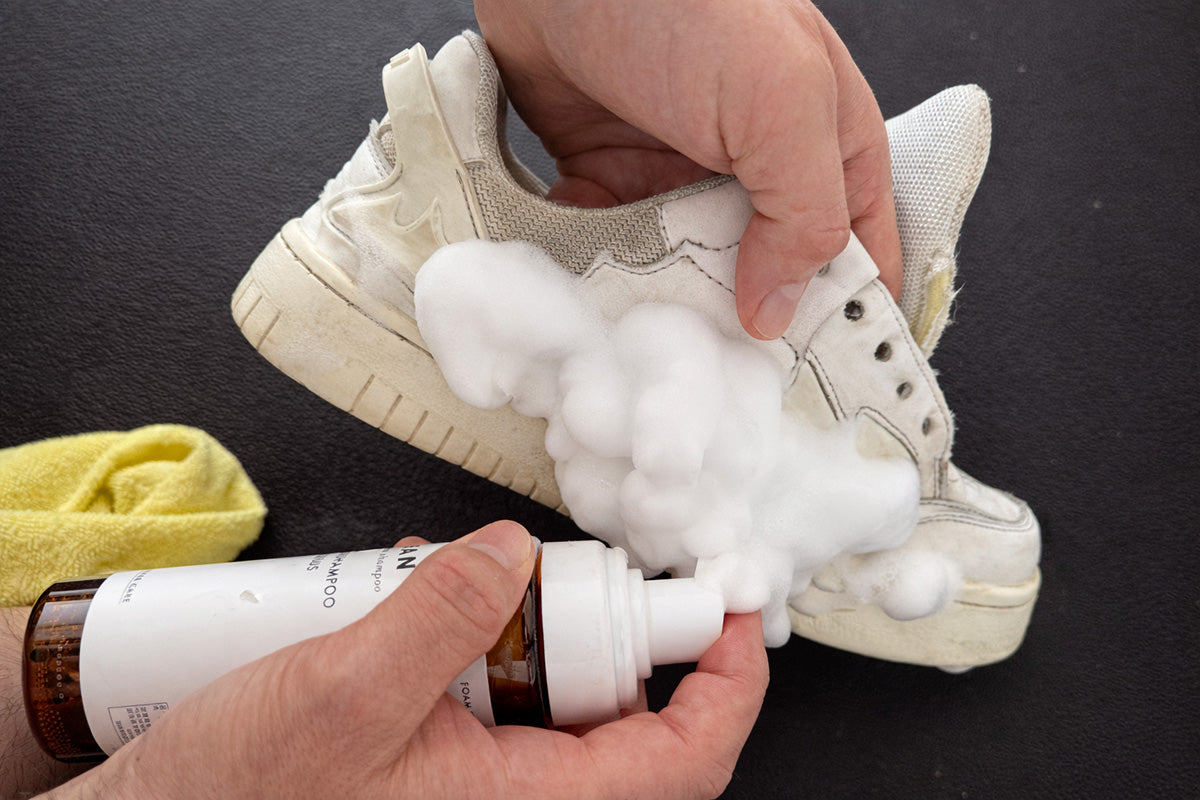
- Apply foam directly to the leather. Work in sections.
- Gently scrub in circular motions, moving from toe to sides to heel.
- Wipe away the residue with a cloth. Repeat if needed.
No mixing. No bowls. No toothpaste mysteriously ending up where it doesn’t belong.

DIY vs foam cleaner on leather: results

Once both shoes were dry, the leather results were very similar. In normal light, it was genuinely hard to tell which shoe had been cleaned with the DIY mixture and which had been cleaned with the foam cleaner. Both lifted surface dirt and restored the white finish without leaving obvious residue.
On cleaning performance alone, there wasn’t a clear winner, which is not always the most satisfying conclusion, but it’s the honest one. The leather responded well to both approaches and the final appearance was comparable.

Where the difference showed up was time and general effort. The DIY method worked, but it involved gathering ingredients, mixing them, and dealing with a fairly runny solution that was harder to keep contained. It spread more than expected, needed more wiping and rinsing as I went, and came with a bit of clean-up at the end.
The foam cleaner was much more contained. It stayed where it was applied, lifted the dirt quickly, and wiped away cleanly. The end result on the leather was much the same, but the process was faster and a lot less fiddly.

The fabric areas were a different story, and deliberately not the focus here. Both methods improved the tongue and collar slightly, but neither fully removed stubborn marks. That’s not a failure of either method. It’s simply how fabric behaves, and it’s why canvas and fabric deserve their own discussion.
That’s exactly what Part 2 will cover.
