

Why shoe fit goes wrong: a real-world case study
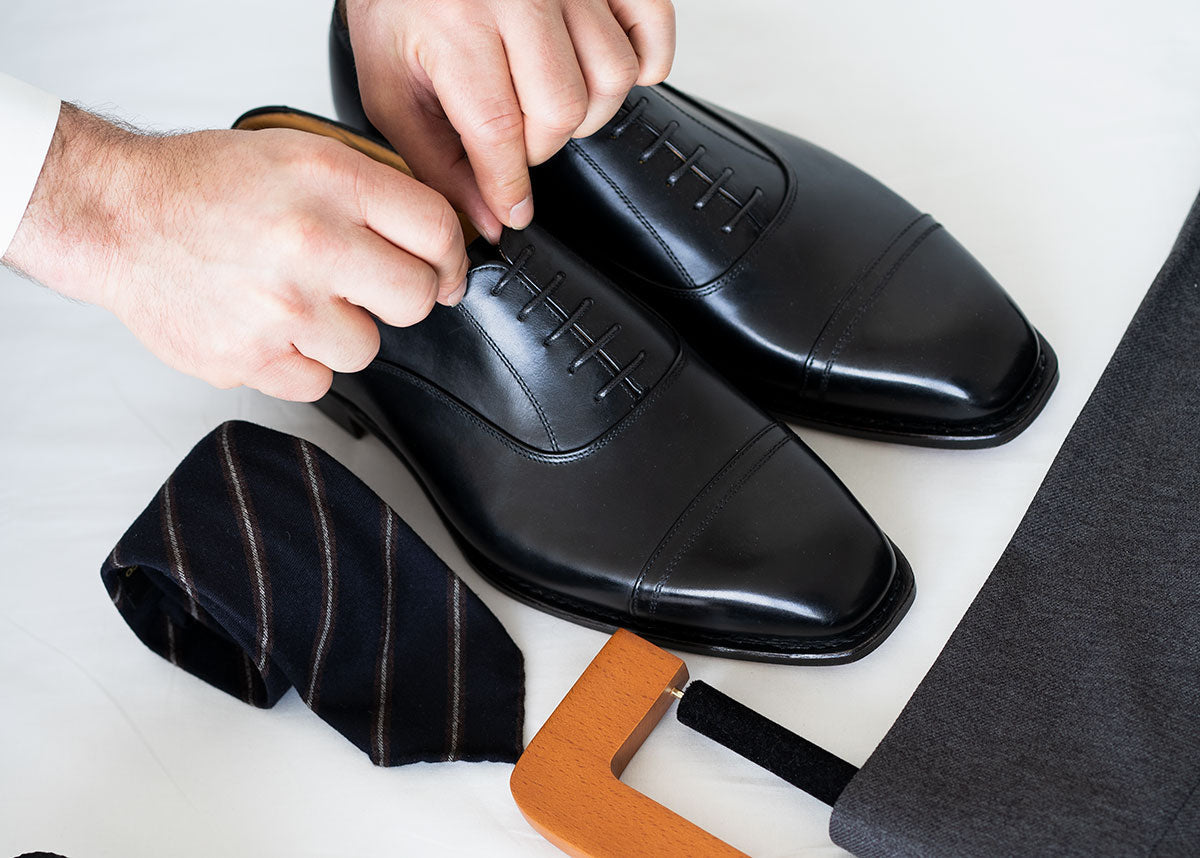

Most shoe-buying mistakes aren’t obvious at first. The shoes feel fine in the shop, maybe even great, and it’s only after a few wears that something starts to feel off. The heel moves. The toes crowd. A pressure point appears where you didn’t expect it.
Over time, those shoes drift to the back of the wardrobe, not because they’re badly made, but because they were never quite right for the foot they were bought for.
After more than a decade in the shoe industry, I’ve seen this play out countless times. The common thread isn’t poor quality or bad taste. It’s a shallow understanding of fit. Not just size, but shape, construction, and how different shoes behave once you’re actually living in them.
This isn’t a sizing guide. This is a case study that looks at how shoe fit decisions change when moving from casual footwear to well-made dress shoes and boots, especially when buying online.
Meet Bryan
Bryan is a thirty-something IT specialist living in Melbourne. He’s getting married in six months, things are going well at work, and he’s decided it’s time to sharpen up his wardrobe. After some preliminary research, he lands on three pairs of shoes he wants to invest in, all well made, all intended to last for years.
First, a pair of Goodyear-welted Oxfords for his wedding. He and his partner are planning a black-tie event, and he feels an Oxford suits the formality they’re aiming for. He hasn’t landed on a shoemaker for this model yet and is open to suggestions.
Second, a pair of R.M. Williams Comfort Craftsman boots. He seems to be the only person in his office without a pair and likes their versatility, along with the fact they’re Australian-made.
Third, a pair of Crockett and Jones Boston loafers in calfskin leather from the UK. Everything he’s read points to the brand being among the best in ready-to-wear footwear, and this particular model appeals for its elegance, build quality, and versatility.
Until now, Bryan’s footwear has been mostly casual. Sneakers, weekend shoes, and a pair of Clarks Desert Boots. He’s always bought a US 10.5 sneaker and owns the Desert Boots in a UK 9.5. They seem to fit well enough. There’s a little extra space at the toes, but nothing that’s ever really bothered him. With no obvious issues, he’s never questioned his sizing.
Bryan comes to me for advice.
When usual shoe size stops being enough
On paper, Bryan hasn’t had many issues with his footwear purchases so far. The difference now is scale. He’s moving from spending around $100 to $150 on sneakers to spending up to $1,000 on a pair of shoes bought from overseas. The margin for error shrinks quickly at that level.
When I first started selling my own Goodyear-welted shoes, I was surprised by how many size returns we received. After speaking with customers, a pattern emerged. Many were using their US sneaker size or their R.M. Williams boot size to select a UK dress shoe. Length might have been close, but width and volume were often wrong.
Before Bryan buys anything online, especially from overseas, we need to understand his foot properly. Not just how long it is, but how it’s shaped.
On the Brannock
We agree to meet at a shoe store that carries multiple well-regarded brands rather than a single label. That distinction matters. Independent stores tend to use a Brannock device set up to measure the foot itself, rather than one calibrated to suit a particular brand’s sizing.
I ask Bryan to meet me mid-afternoon and to wear the socks he’d normally wear with dress shoes. The timing is deliberate. Feet tend to swell slightly as the day goes on, making it a better moment to assess fit.

McCloud Shoes, Melbourne. Photo @McCloud Shoes
Bryan arrives having already spotted a pair of Oxfords on the store’s website that he’s keen to try.
On the Brannock device, what he thought he knew about his feet changes quickly.
His longest foot measures a true UK 9.0. Not borderline. Not a half size either way. A clean 9.0. When we check width, the rest falls into place. His forefoot sits clearly into a wide fitting for that length (E fitting), and he carries a little extra height through the midfoot. Together, those measurements explain why a half size up has always felt like his natural fit.

Drawing of Brannock Device @ US Patent 1,725,334
He wasn’t buying extra length because his feet were long. He was buying it to make room.
Different shoes suit different feet
Bryan is keen to try the Oxford he’d picked out. Predictably, it doesn’t work. It feels tight across the forefoot and restrictive over the top of the foot.
The reason is straightforward. An Oxford uses a closed-lace construction, where the eyelet facings are stitched underneath the vamp. That structure leaves very little room for adjustment. On a wider foot with a higher arch, the shoe quickly feels constricting unless the fit is spot on.
The store assistant suggests an open-laced Derby in a wide fitting, still in a UK 9. This time, the difference is immediate. The shoe sits comfortably across the forefoot, the lacing allows the upper to open slightly over the instep, and the fit feels balanced.

Loake’s 205 Derby. Photo @Loake Australia
Wedding shoes sorted.
Buying without trying them on
A short while later, Bryan calls to tell me he’s bought a pair of Comfort Craftsman boots online. Armed with his new measurements, he selects a UK 9 wide fitting. They were discounted by twenty percent, which is rare for that model, so he moved quickly.
When they arrive, the disappointment sets in. The boots feel cramped, particularly around the toes. This wasn't about 'breaking in' the boots. and he was worried that a boot stretcher would only make his toe bulge out from the side - my protests notwithstanding. After going through the effort of getting measured and applying that knowledge, he’s frustrated to find the result isn’t quite right.
Fortunately, he checked the return policy before buying. The boots go back without issue, but the experience dents his confidence.
What went wrong?
The issue wasn’t the measurement. It was the model.
With the Craftsman, and Chelsea boots more generally, there are no laces to adjust. The foot is held in place by a single piece of leather, with elastic sides that allow entry but do little to fine-tune fit. Length and width either line up cleanly, or they don’t.
For someone like Bryan, that lack of adjustability matters.
Comparing notes with other wearers
Undeterred, Bryan decides to dig a little deeper before trying again. I suggest he spend some time reading how Chelsea boots behave across different foot shapes, particularly for people with wider forefeet and higher insteps.

Manufacturer last sizing thread @r/goodyearwelt
Spend enough time reading online and you’ll see familiar shorthand repeated: “they run big”, “they’re tight over the instep”, “this last doesn’t suit wide feet”. These comments usually come from genuine experience, but they’re still individual outcomes, shaped by foot shape, tolerance for snugness, and how much compromise someone is willing to accept.
What matters more than the advice itself is the context behind it. Some people gain comfort by chasing width. Others find better balance by adjusting length slightly and accepting a narrower fitting. Neither approach is universally right.
In my own case, for example, I measure as a 10H in R.M. Williams. I ended up purchasing a 10.5G, and it fits well. On paper, that looks contradictory. In practice, it simply reflects how length, width, and overall volume trade off against each other depending on the last and the construction of the boot. Moving half a size in length while stepping down a width can result in a more balanced fit than treating measurement as a fixed rule.
Manufacturer last sizing discussions, including long-running threads on r/goodyearwelt, reinforce this point. Many wearers document both their Brannock measurements and the sizes they ultimately settled on, often showing small but deliberate adjustments rather than strict adherence to a single number. The takeaway isn’t to size up or size down blindly, but to understand how a specific model behaves on a specific foot shape.
The second attempt
This time, Bryan orders the Craftsman in a UK 9.5G (standard width). Full price, unfortunately, but with far more confidence. The fit is noticeably better. The extra half size eases the pressure at the toes without throwing everything else out of balance.
He wishes he’d spent that extra ten minutes researching before his first purchase, but the lesson sticks.
Buying from England: to be or not to be
When it comes time to buy the Crockett and Jones loafers, Bryan pauses. Loafers are less forgiving than boots, and overseas returns are expensive. After weighing up the risk, he buys them locally instead.

Boston penny loafers by Crockett & Jones. Photo: Crockett & Jones
The upfront cost is higher, but the potential cost of getting it wrong is lower. For Bryan, that trade-off makes sense.
What actually changes
By the time Bryan finished his purchases, nothing about his feet had changed. What changed was the information he was working with, and how he used it.
The point wasn't that one brand runs large or another runs small. It was that shoe fit is shaped by more than a number on a box. Construction matters. Adjustability matters. Some shoes allow compromise; others don't.
A closed-lace Oxford demands precision.
A Chelsea boot offers very little room to negotiate.
A loafer leaves almost no margin for error at all.
Buying shoes online doesn’t have to be a gamble, but it does require context. Knowing your measured size is a starting point, not an answer. Understanding how a model behaves, how others with similar feet have fared, and what the cost of getting it wrong might be often matters more than chasing the “correct” size.
Bryan didn't end up with perfectly fitting shoes, and that was the point. He ended up with shoes that fit his feet well enough to be comfortable, bought deliberately, and worn regularly rather than ending up back in its shoe box.
Even if you follow this experience to the letter, a "perfect fit" is never guaranteed. This is where we have your back. Our range of shoe, boot and high heel stretchers will make those shoes or boots fit as the shoemaker intended.