


What Size Hanger Do I Need?
A Guide for Suits and Coats
The simplest way to choose is to start with your jacket size, find it in the chart below, then check that the hanger supports the jacket's shoulders without pushing into the sleeves or leaving the shoulders half suspended in thin air.
When we developed our hangers, we tested approximately 60 individual jackets and coats, from made-to-measure to ready-to-wear. Thank you to the family, friends and businesses who opened their wardrobes to help us.
We also tried measuring methods recommended by other hanger makers, but found that using the jacket's labelled size was simpler and more reliable in practice. The aim was to make choosing a hanger easy, without asking you to become an expert in garment measurements.
Why Width Matters
A friend who runs a successful consulting firm let us into his wardrobe. He had several beautiful suits from makers including Ermenegildo Zegna, Canali, and Gieves and Hawkes, alongside a rack of other made-to-measure and off-the-rack brands.
He's a well-built guy, the sort you'd expect to see on a rugby field or in the gym, and most of his suits are EU 54–56. His hangers were a hodgepodge of substantial wishbone hangers supplied by tailors, plastic suit hangers, and thinner wooden ones.
The wishbones held the shoulders well, but many of the narrower hangers stopped well short of the jackets' shoulders. The fabric beyond their ends sagged, and several of these jackets, he explained, showed noticeable puckering while worn.
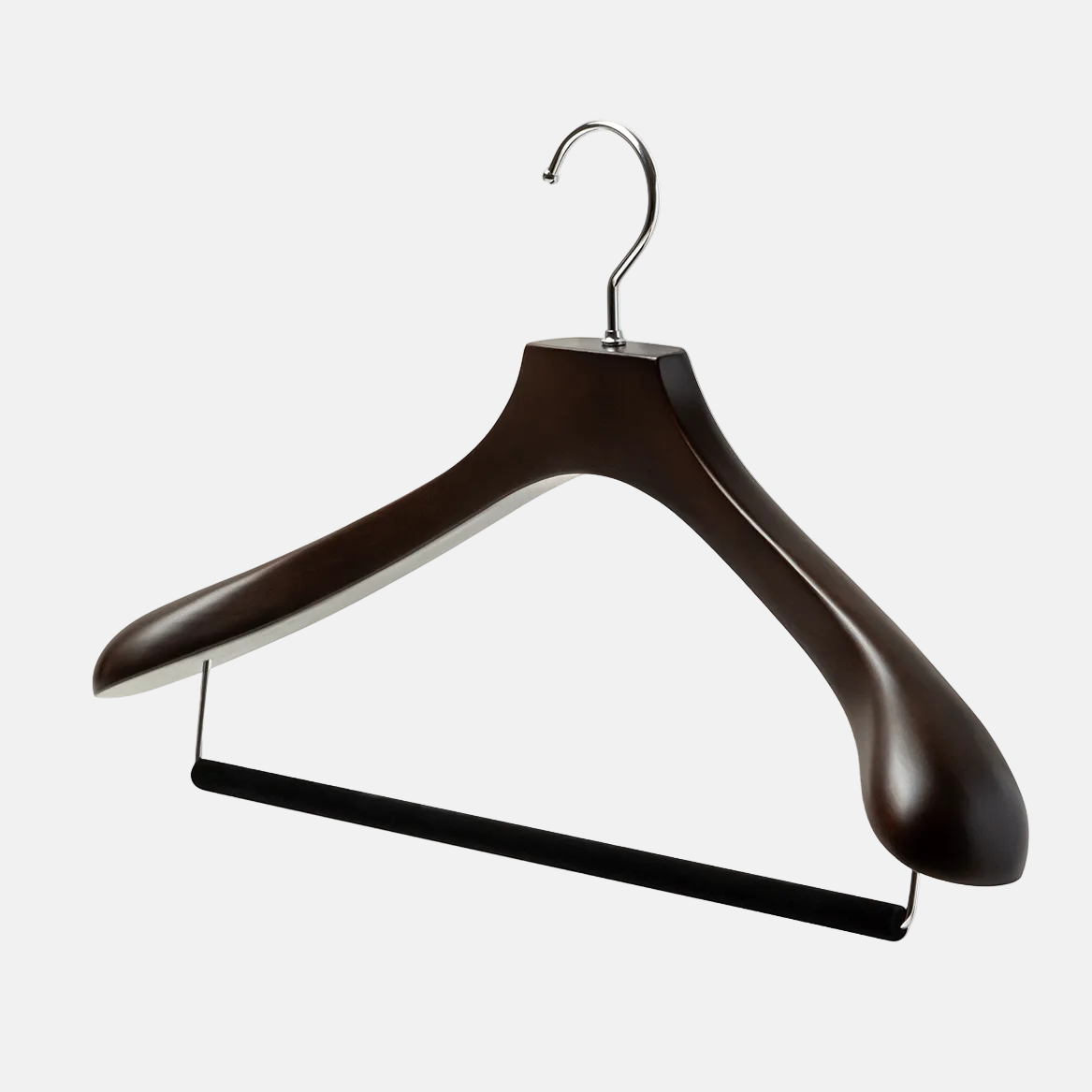
We tried a selection of his jackets on our 460 mm suit and coat hangers. The shoulders were supported, and the sleeves and back fell naturally. It was a visible improvement in how the jackets hung.
It's easy to overlook: a hanger can hold a jacket without properly supporting it. If the hanger is too narrow, part of the shoulder is left unsupported. If it's too wide, the ends push into the sleeves. The right width lets the jacket hang naturally while supporting its internal structure.
Start with your usual jacket size
These charts are for Trimly suit and coat hangers.
Men's suit and coat hangers
| Hanger width | AU (cm) | UK/US (inches)* | EU |
|---|---|---|---|
| 380 mm | 92–96 | 36–38 | 46–48 |
| 420 mm | 100–104 | 40–42 | 50–52 |
| 460 mm | 108+ | 44+ | 54+ |
*Some Australian brands label UK/US sizing as AU, so check which sizing convention yours uses before choosing a column.
Women's suit and coat hangers
| Hanger width | AU jacket size |
|---|---|
| 380 mm | 6–16 |
| 420 mm | 18+ |
Approximately half the garments we tested were women's jackets and coats, including pieces from Camilla and Marc, AJE, Cue and Vince. Our testing covered the sizes listed in the chart, including AU 6 and AU 16 on the 380 mm hanger, and AU 18 and above on the 420 mm.
In the women's garments we tested, shoulder width increased less between sizes than in the men's garments. That allowed us to cover the tested range with fewer hanger widths.
Brands cut differently, so use the chart as your starting point and confirm the fit on the garment itself.
How to check fit
Place the jacket centrally on the hanger, settle the shoulders into position and look at how the fabric falls.
Right fit: The shoulders are supported, the sleeves fall naturally, and there are no visible bumps from the hanger ends.
Too wide: The ends push into the top of the sleeves, creating a visible protrusion.
Too narrow: The ends fall well short of the shoulders, leaving them unsupported and allowing the fabric to sag or crease.


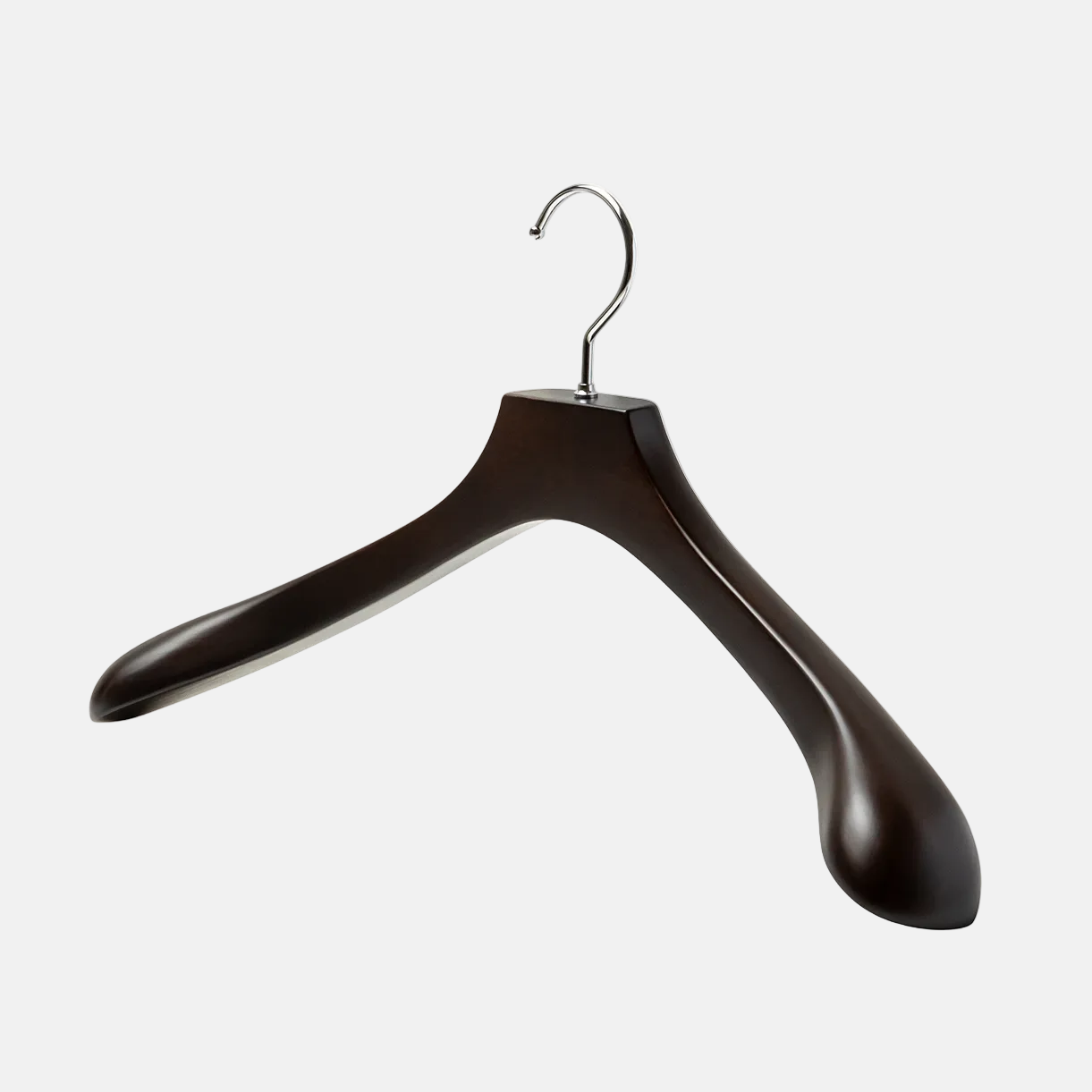
Width is only part of the picture. In our testing, our hangers' contours followed the natural slope of the shoulder and thus sat better within the jackets and coats themselves. The broad shoulder flares made contact across more of the structured shoulder area, spreading the support over a larger surface.
When your size sits between two widths
Some jackets can sit well on either side of two hanger widths. My own jacket is a good example.
I usually wear AU 104 / UK-US 42 / EU 52, the top of the 420 mm hanger range and one size below 460 mm. I tried my fitted suit on both. Both fitted without protruding into the sleeve, but I preferred the 420 mm because it sloped a little more naturally into the sleeve. A friend who wears the same labelled size preferred the 460 mm for his jacket. The same labelled size didn't mean the same preferred width.
If you're still in doubt, follow this instruction: measure the shoulder width of your jacket by laying it flat, fastening the primary button, and measuring the straight-line distance between the shoulder seam tips. Subtract 2 to 4 cm from this measurement to determine your recommended hanger length.
And if you're still unsure, contact us at info@trimly.com.au and we'll help you choose.
A few common questions
-
You can (see previous section), but in our testing we found it less straightforward than starting with your usual jacket size. The jacket’s cut, where you measure and how tightly you pull the tape can all affect the result. We wanted an approach that’s easy to use at home: start with your jacket size, then check that the hanger supports the shoulders without pushing into the sleeves, allowing the jacket to drape naturally.
-
Not necessarily. In our testing, coats suited the same hanger width as suit jackets in the equivalent labelled size. Padding alone wasn’t a reason to size up.
Check how the shoulders sit once the garment is hanging, particularly if the cut has an exaggerated shoulder.
-
Generally yes, provided your suits and coats fit consistently. Check individual pieces where the cut differs noticeably.
Shirts are less structured and don’t need the same level of support as a tailored jacket. One shirt-hanger width can often work across your shirts, as long as it doesn’t stretch or distort them.
-
Contact us before ordering so we can help assess the fit. Don’t assume the smallest or largest hanger will be suitable simply because it’s the closest option.
-
No chart can account for every garment. If you need a smaller or larger size, send your hangers back for an exchange or refund within 30 days. We cover the return postage. See our returns page for further info.


Browse The Collection
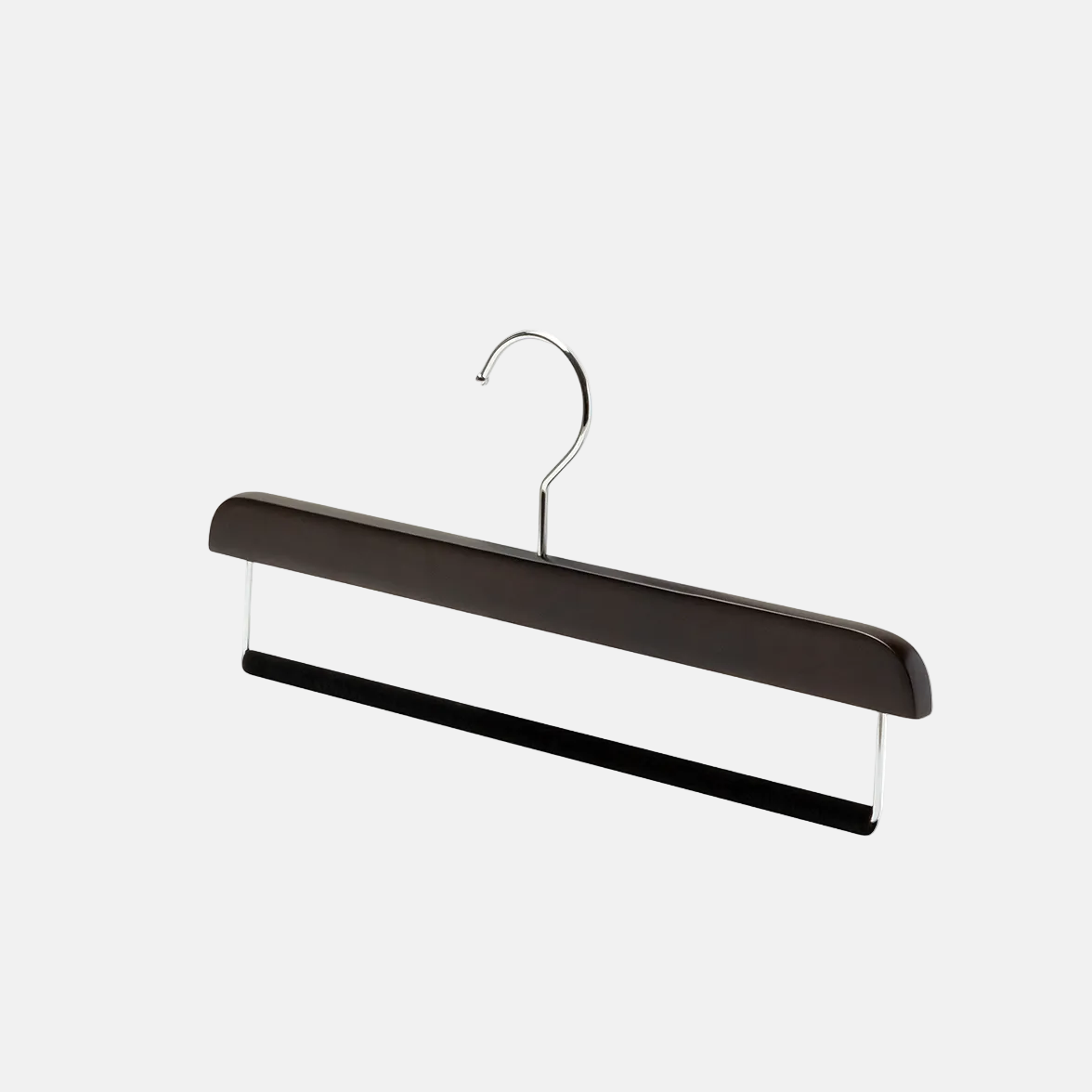
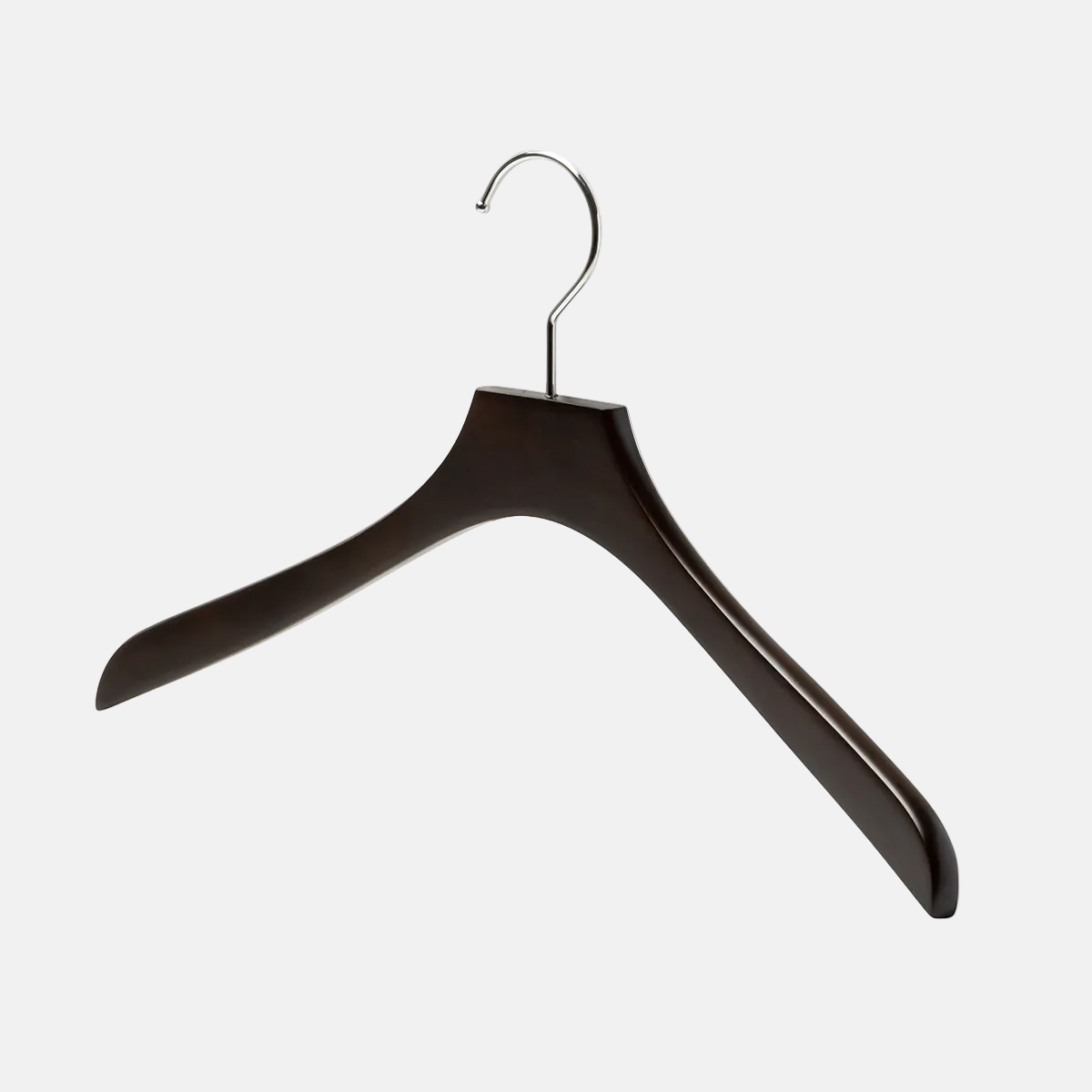
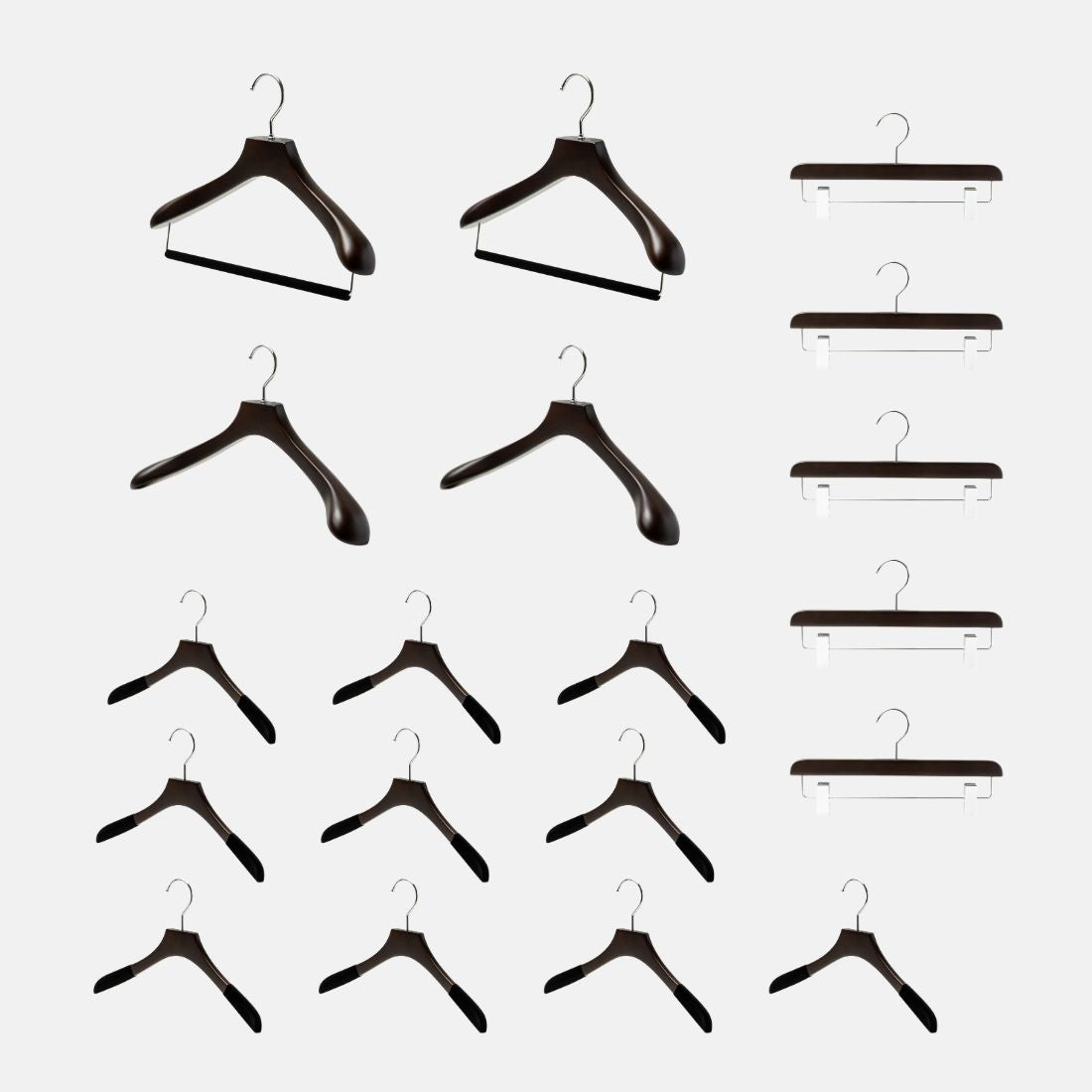
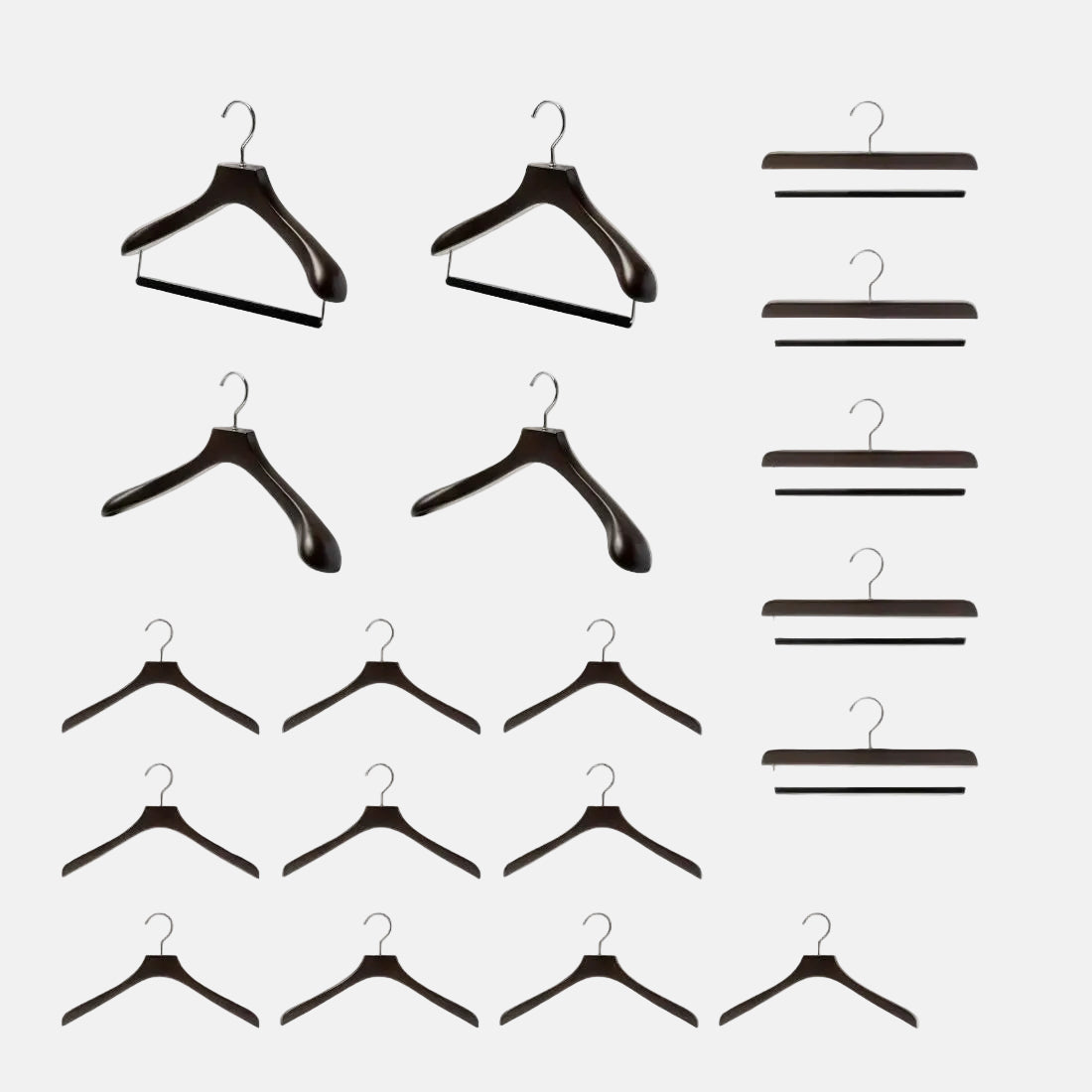
A collection of luxury wooden hangers designed around the garments they hold. Broad, contoured shoulders support tailored jackets and coats without distorting their shape, while slimmer profiles keep shirts, trousers and skirts properly presented between wears. Crafted from solid beech wood and hand-finished to bring a considered, consistent look to your wardrobe.